Tuesday, 31 December 2019

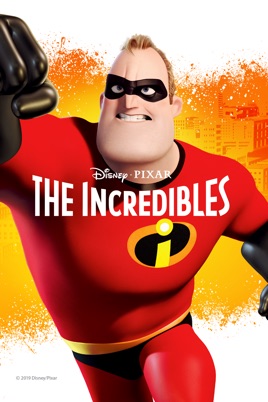
Pixar Playlist #6 - The Incredibles

Ladies and Gentlemen, whether you like it or not, the Pixar Playlist


The Incredibles represented a unique challenge for Pixar, as the first film that had leads that were all human, and an entirely human set of background characters, requiring new techniques for animating clothing, muscle and hair but this film presented unique challenges in animating fire, water, air, steam, explosives and dust. It had quadruple the number of the locations of other Pixar films and at the time had the longest run-time. Topping all that off, the writer and director of this film, Brad Bird was pretty new to the CGI game. His previous film was The Iron Giant, which did utilise CG, but not to this extent.

With all that in mind, it’s amazing this film ended on a $92m budget, $2m less than the much less innovative and shorter Finding Nemo. The film went onto making $633m at the box office and continues Pixar’s streak of critical hits with a 97% Rotten Tomatoes rating. But where does it rank on the Pixar Playlist, let's take a look

Tuesday, 24 December 2019

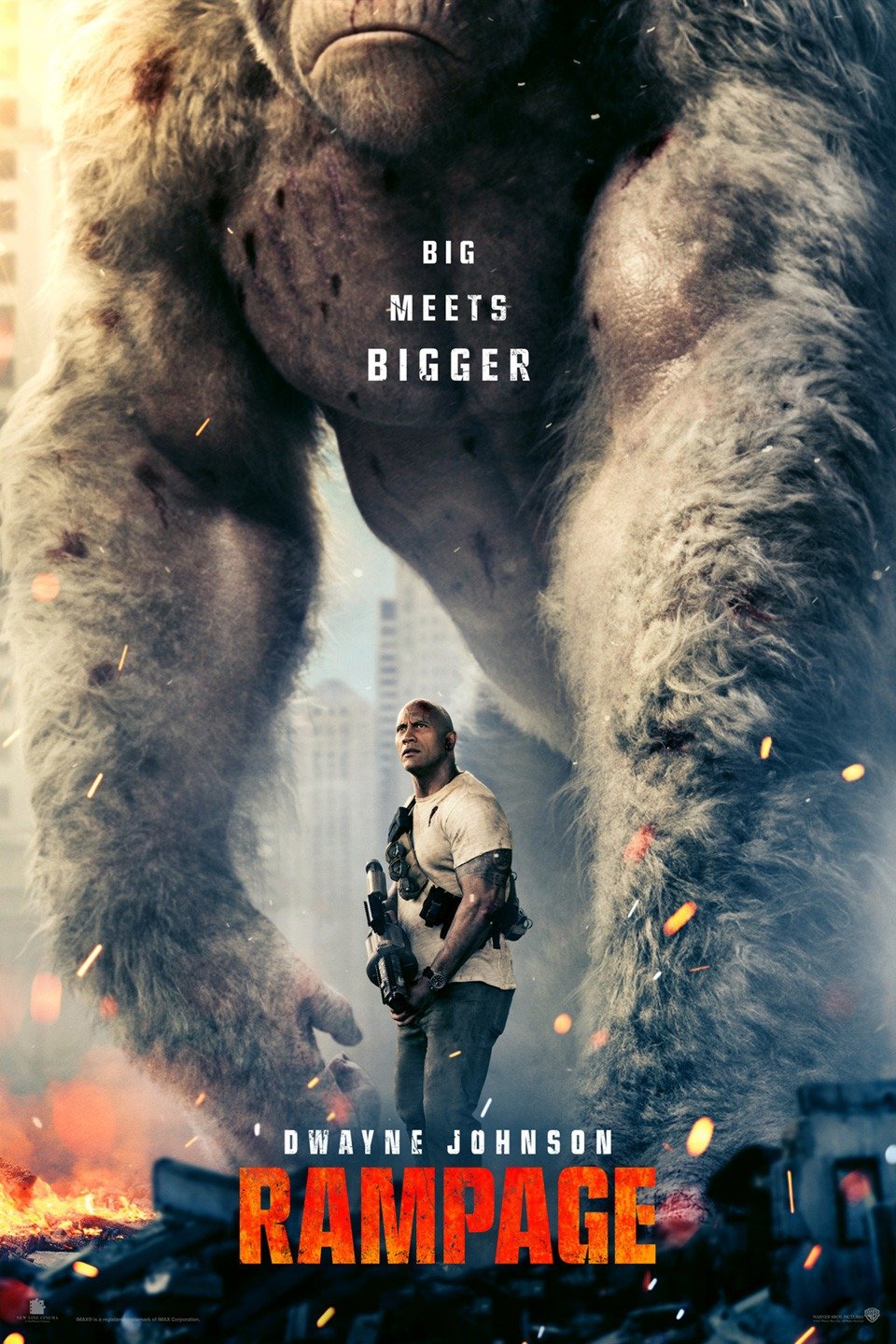
Praise4Media #60 - Rampage

Video Game Adaptations are rarely good. You can get films which are super unfaithful and stupid as hell, like the Super Mario Bros. Movie or you could get ones that are faithful, but are equally as underwhelming, like the Ratchet and Clank movie turned out to be. And most of them are financial failures. One that broke that mould, before Detective Pikachu came along was Rampage


Yes, we’re back with The Rock on a video game movie… I’ve never played Rampage… Sorry? But a quick Wikipedia summary tells me you play as a monster and your objective is to destroy the city. OK, a movie would never play out like that, but that’s a fun enough premise to run with, basically a monster movie.

The film made $430m on its $120m budget, although with an additional $140m spent on marketing, it’s unclear whether this actually broke a profit or not. Directing this is Brad Peyton, who’s worked with The Rock before on San Andreas and Journey 2: The Mysterious Island. On the writing team we have Ryan Engle, who’s helped write Non-Stop, Carlton Cuse who co-wrote San Andreas, Adam Sztykial, who co-wrote Alvin and the Chipmunks: The Road Chip, poor guy and Ryan J Condal, who co-wrote Hercules, another film featuring the Rock.

The film had a mixed critical reception, it has a 51% Rotten Tomatoes rating, with an average 5.27/10, but audiences seemed kinder, giving it a 73% rating with an average 4.05/5. So, who’s right in this non-debate? Let’s take a look.

Tuesday, 17 December 2019

Saturday, 14 December 2019

Adaptation Month - Mary Poppins

We conclude adaptation month with a film that’s loved by everyone, except the writer of the book. Mary Poppins


Mary Poppins is a children’s book released in 1934 and written by P L Travers, a film adaptation was released by Disney in 1964, with a screenplay by Bill Walsh and Don DaGradi, both of whom had previously worked with Disney, in particular in their animation department and had written Son of Flubber. The Sherman Brothers also deserve some credit for the songs in this movie, which they had written.

PL Travers objected to the use of musical numbers and animation, but Disney overruled here, so it’s not hard to see why she was sour on the project. But does it do justice to the book’s story? No, I’m not going to even pretend that it does, so here’s my thoughts on the book just as a book.

The Book

Mary Poppins is a children’s story, it’s filled with a sense of magic and weirdness that kids are likely to be drawn to but lacks any real nuance or narrative, or really much in terms of character for adults to enjoy reading on their own.

The Film

This film does have its problems, in particular in regards to the ending, but I think they did a marvellous job. Considering the technology that made this film possible was very new around this, the animation/live action integration is impressive. The songs are fantastic and the film provides wonder for kids whilst also providing the depth and narrative the book oh so desperately needed to appeal to adults.

Please note, I am only looking at the first Mary Poppins Book, if ideas are taken from its sequels, that’s great but I haven’t read those, so I’m judging this purely as an adaptation of the book it’s named after.

Tuesday, 3 December 2019

Adaptation Month - 5 Feet Apart

I am not a medical expert, and I’m not gonna rattle off statistics about Cystic Fibrosis. I do recommend checking out cysticfibrosis.org.uk if you’re in the UK or equivalent charities if you live elsewhere.


OK, I’m cheating a bit on this one, but in my defence, I only just worked that out. 5 Feet Apart the book was released in November 2018, with the film being released in March 2019 in the UK. Rachael Lippincott handled the novelisation of a screenplay written by Mikki Daughtry and Tobias Iaconis. Because of this being a novelisation tying into the film, it’s already pretty guaranteed to be a very loyal adaptation but sometimes changes happen that affect the film, but not the novel, will this be the case here? Before we get into it, here are some thoughts on the book and film as individual entities.

The Book

Rachel Lippincott utilises a dual-perspective narrative, with the two leads taking alternate chapters like in Allegiant. It works better here because our leads have more distinct personalities and individual conflicts outside of the one driving the main narrative. It’s well enough written but suffers from the same limitations the plot of the film has

The Film

From a filmmaking perspective, I see why this film was made. Setting it during a hospital stay (and what a lovely hospital, expensive I’d bet) means the film takes place in a relatively small number of locations, and without any major Hollywood actors, it kept the budget down. The characters are likeable in their own ways and I enjoy their performances. The story is little on the dull side, sadly, it could’ve done with some meatier subplots. With regards to the portrayal of CF, I find it hard to believe they’d even allow 6ft if they were high risk like these guys.

On the subject of the film, wtf were they thinking with that Instagram marketing campaign! They asked for stories of long-distance relationships and tried to equate it to living with Cystic Fibrosis, that’s all kinds of offensive and shame on them for doing that.

Tuesday, 19 November 2019

Adaptation Month - The Golden Compass

This one is an infamously bad adaptation, but is it as bad everyone claims it is?


Northern Lights was written by Phillip Pullman and was released in 1995, being an adventure story aimed at Young Adults, of course it was part of a trilogy, named ‘His Darkest Materials.’ The US name for the book was the Golden Compass, hence that being the name of the film adaptation.


Handling the adaption to screen, in both screenplay and directing is Chris Weitz, at this point in his career he’d written Antz, Nutty Professor II and About a Boy and this is his first project as a director without his brother, Paul helping him along. They also tended to work together on the screenplay side too.

The book had its share of controversies and they were carried over into the adaptation process, with criticism from both sides leading to the studio demanding massive changes in post-production. This is rarely ever a good sign.

The film had a $180m budget and made $372m at the box office, a strong international performance saving it from a dismal $70m performance in the US. The reviews were mixed, the film has a 42% Rotten Tomatoes rating with an average 5.61/10 score, and audiences gave it a 51% rating with a 3.22/5 average score.

Before we start, my thoughts on the book:

Sunday, 17 November 2019

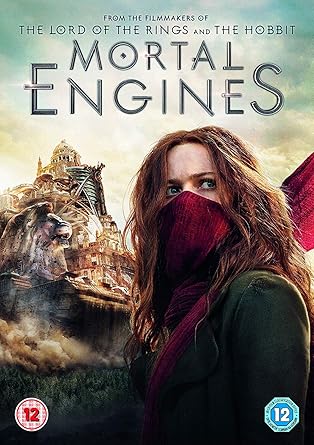
Adaptation Month - Mortal Engines


A wrinkle in time was the second biggest box office disaster of 2018, but now we look at the actual biggest, Mortal Engines.


Mortal Engines the book was released in 2001 and the first of a quartet written by Phillip Reeve. The film rights were purchased in 2009 by Peter Jackson, best known for the fantastic Lord of the Rings trilogy and the dull as sh*t Hobbit movies. He’s no stranger to adaptations is all I’m saying. He’s among the writers for the screenplay along with Fran Walsh and Phillipa Boyens, both of whom also worked on the aforementioned trilogies.

Directing the movie is Christian Rivers, who has experience in quite a bit of film-making, having met Peter Jackson at 17 and worked with him on various projects. This is his first stint as a full on director though. Not exactly encouraging for a project with a budget of up to $150m. It really backfired, earning $83m at the box office. And it didn’t do great with audiences, 27% rating on Rotten Tomatoes, with an average 4.9/10 and an audience score of 50% average 3.17/5. Before we get to adaptation, here are my brief thoughts on both.

The book

Ignoring the premise that is ludicrously absurd, the book does a decent job of tying it to something resembling reality… Until a moment right near the climax of the book which is so ludicrous it takes me out of the story and into the next galaxy. It’s been a while since I’ve read a book written from a third person perspective. It’s probably for the best since we follow so many characters in this.

The Film

It’s a very pretty movie, and I’m afraid that’s about as far as I can go when it comes to compliments, I guess it’s self-contained which is something. It’s blatantly clear that Christian Rivers’ skills aren’t in directing, as this film isn’t the best acted. I can’t really talk too much about the plot but there are tones of holes in it. I can see why Peter Jackson made little effort when promoting this.

But let’s talk adaptation